
Quick answer
Hood filters need cleaning far more often than the rest of your exhaust system. Manufacturers such as CaptiveAire recommend cleaning baffle filters daily. Filters that are bent, warped, or no longer fit without gaps should be replaced. And clean filters are only the first layer: grease that gets past them still builds up in the plenum, the duct, and the rooftop fan, which is why the whole system also needs regular professional inspection, and cleaning whenever grease builds up.
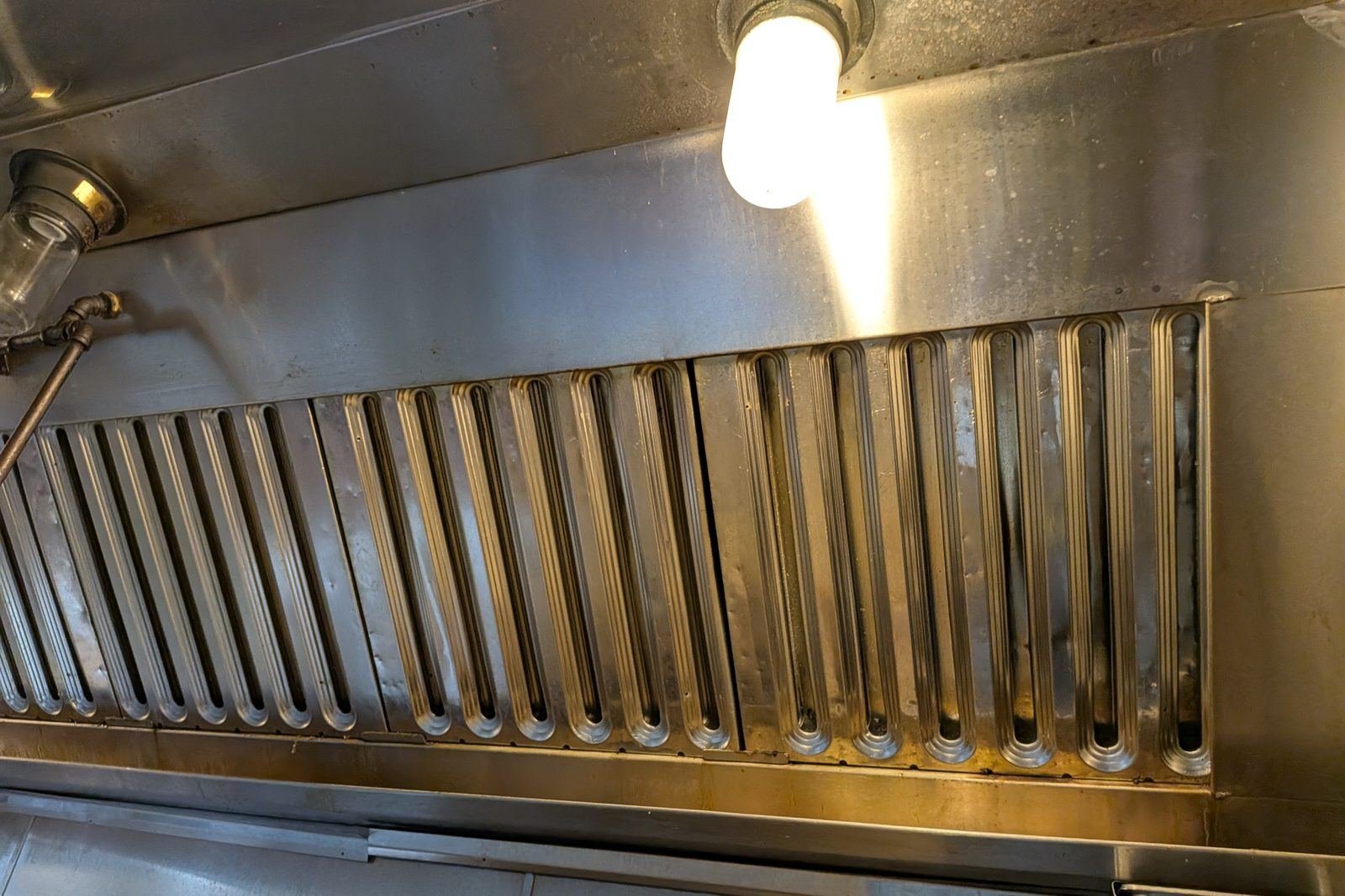
Hood filters are the part of your kitchen exhaust system your team actually touches. They are also the part most operators have questions about. How often should we wash them? Can they go in the dishwasher? Should we use a filter exchange service? When is a filter done? This guide answers those questions plainly, and explains where filter care ends and a full hood cleaning begins.
What hood filters do, and what they do not do
The filters in a commercial hood are grease filters. Hot, grease-laden air rises from the cooking equipment, and the filters force that air to change direction several times as it passes through. Grease droplets hit the metal, condense, and drain down into a grease trough or cup instead of traveling up into the duct.
That is the job: capture part of the grease before it reaches places that are hard to clean. No filter captures all of it. The grease that gets through settles in the plenum (the space directly behind the filters), the duct that runs up through the building, and the exhaust fan on the roof. Those surfaces are hidden, hot, and difficult to reach, and grease left there becomes fuel inside the duct. Washing your filters protects the system. It does not clean it.
The types of hood filters you will find in a restaurant
Most Houston restaurant hoods use baffle filters: rectangular panels made of overlapping metal channels. The material matters for how you clean them.
| Filter | What it is | Care notes |
|---|---|---|
| Stainless steel baffle | Durable and widely used in busy kitchens. | Many manufacturers approve a commercial dishwasher or a soak in commercial degreaser. Follow your manufacturer’s guidance. |
| Aluminum baffle | Lighter and less expensive. | Check the manufacturer’s chemical guidance before using strong degreasers or dish machine detergents. |
| Galvanized baffle | Coated steel, a lower-cost option. | Look for rust and worn coating each time you wash it. |
| Mesh filter | Woven or layered metal mesh, like a household range hood. | Not allowed as a grease filter in a commercial hood unless it was evaluated as part of a listed hood. If you see mesh, ask about replacing it. |
Whatever the material, NFPA 96 calls for listed grease filters (tested to the UL 1046 standard), installed at an angle of at least 45 degrees with a drip tray beneath them, and arranged so that all of the exhaust air passes through the filters. If you are unsure what you have, the label or stamp on the filter frame usually identifies the manufacturer and listing.
How often should you clean hood filters?
Neither the fire code nor the Houston Fire Department’s hood standard sets a washing interval for filters. The Houston Fire Department’s standard for kitchen hood systems is practical about the whole system: hoods, ducts, and fans are to be cleaned “as often as necessary to prevent excess grease accumulations.”
For the filters themselves, start with the manufacturer. CaptiveAire, a major commercial hood manufacturer, recommends cleaning baffle filters daily, with a commercial dishwasher as the preferred method when one is available. Daily is the right default for any kitchen running fryers, charbroilers, woks, or long hours. If your kitchen cooks lightly and your own filter manufacturer allows a longer interval, let the filters tell you.
The easiest test: run a gloved finger along the inside of a baffle at the end of a shift. If it comes away slick or tacky, the filters are due. If grease is dripping from the filter edges or pooling in the trough, they are overdue, and the plenum behind them probably needs attention too.
How to clean baffle filters correctly
Step by step
- Let the hood and filters cool. Remove filters only when cooking has stopped and the metal is cool enough to handle. Wear gloves; baffle edges are sharp.
- Soak in hot water and degreaser. Use a sink or soak tank large enough to submerge the filter, with a commercial degreaser your filter manufacturer approves. Manufacturers commonly warn against caustic or chlorine-based chemicals, which can corrode metal.
- Scrub along the channels. A non-abrasive brush works grease out of the folds. Skip steel wool and harsh abrasives, which scratch the metal.
- Rinse thoroughly. Rinse off all of the degreaser before the filters go back.
- Dry completely. Stand filters on edge so water drains out of the channels.
- Reinstall correctly. Follow the orientation marks on the frame so the baffles run the right way and grease drains toward the trough, and fill every slot with no gaps between filters.
Can hood filters go in the dishwasher? Often, yes. CaptiveAire names a commercial dishwasher as its preferred method when one is available. Check your own filter manufacturer’s instructions first, especially for aluminum filters and strong detergents.
One more habit worth building: never leave an empty filter slot while cooking. A missing filter is an open path for grease straight into the duct.
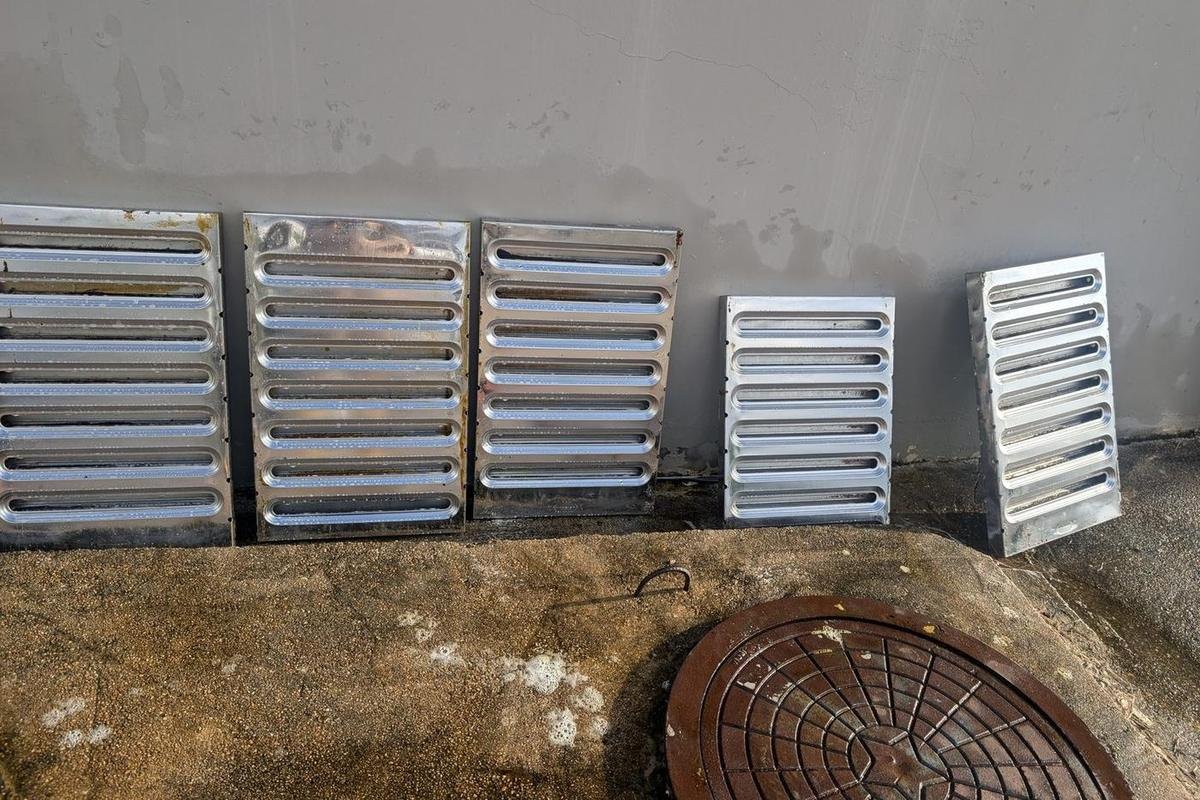
Clean, exchange, or replace: what each option means
If you are searching for hood filter exchange or filter replacement, it helps to know that these are three different things.
| Option | How it works | Best for |
|---|---|---|
| In-house cleaning | Your staff removes, washes, and reinstalls the filters on a routine. | Kitchens with the space, sink, and staff time to do it consistently. |
| Filter exchange service | A vendor swaps your dirty filters for clean ones on a set schedule and cleans the dirty set off site. | High-volume kitchens that would rather not wash filters at all. |
| Replacement | A damaged or worn-out filter is retired and a new listed filter of the correct size takes its place. | Any filter that is bent, warped, corroded, or no longer seats properly. |
None of these replaces a full exhaust cleaning. A filter exchange keeps the filters clean between visits, but it does not touch the plenum, the duct, or the fan. When Albedo’s Return cleans a kitchen hood, the filters are removed, cleaned, inspected, and reinstalled as part of every service, along with the rest of the system from the hood to the rooftop fan. Here is what happens during a commercial hood cleaning, step by step.
Signs a filter needs replacing, not cleaning
NFPA 96 calls for grease filters rigid enough that they will not distort or crush. A filter that is bent or warped has already stopped doing its job.
- Bent or crushed baffles that no longer form clean channels.
- A warped frame that rocks, sits crooked, or leaves a visible gap.
- Holes, cracks, or corrosion, especially on galvanized or aluminum filters.
- Broken or missing handles that make safe removal difficult.
- Grease that will not come off even after a proper soak and scrub.
- The wrong size for the opening, or a mesh filter where a baffle filter belongs.
Even one damaged or missing filter leaves a path for grease to bypass the bank and travel straight into the plenum and duct, so damaged filters are worth replacing promptly.
Clean filters do not mean a clean exhaust system
A kitchen can keep its filters spotless and still carry a heavy grease coat in the duct and fan, because nobody looks behind the filters. You can check the first part of that yourself: pull one filter after a shift and look at the plenum behind it. If the metal there is coated or sticky, the duct beyond it is not cleaner.
The fire code sets how often the full exhaust system is inspected, based on the type and volume of cooking. When an inspection finds grease buildup, the system must be cleaned. Cleaning does not have to wait for an inspection, though: Houston’s hood standard calls for cleaning as often as necessary to prevent excess grease accumulations.
| Type of cooking | Inspection frequency |
|---|---|
| Solid fuel (wood, charcoal) | Monthly |
| High volume (24-hour cooking, charbroiling, wok cooking) | Every 3 months |
| All other cooking operations | Every 6 months |
| Low volume (places of religious worship, seasonal businesses, senior centers) | Every 12 months |
Source: the 2021 International Fire Code, which the City of Houston enforces. Your fire code official can approve a different schedule. For help placing your own kitchen on this table, see how often to clean a restaurant hood in Houston.
A three-point filter check for Houston kitchens
Whether you run a lunch kitchen Downtown, a neighborhood spot in the Heights, or a full-service restaurant in River Oaks, three filter problems are worth ruling out:
- Gaps. Filters that are clean but installed with a gap, or with one slot left empty.
- Wrong chemistry. Filters washed with a caustic or chlorine-based cleaner the manufacturer does not approve, which can corrode the metal.
- Clean filters, dirty fan. Filters washed every week while the exhaust fan on the roof has gone a year or more without cleaning.
We check all three during a free assessment anywhere in our Houston service area, including Downtown, the Heights, and River Oaks.
Frequently asked questions
How often should restaurant hood filters be changed?
There is no fixed lifespan. Replace any filter that is bent, warped, corroded, or no longer seats without gaps.
Can I put hood filters in the dishwasher?
Often, yes. CaptiveAire names a commercial dishwasher as its preferred method when one is available. Check your own filter manufacturer’s instructions first, especially for aluminum filters.
Are mesh filters allowed in a commercial kitchen hood?
Not as grease filters, unless they were evaluated as part of a listed hood. NFPA 96 calls for listed grease filters, and most commercial hoods use baffle filters.
Does cleaning the filters count as hood cleaning?
No. Filter cleaning is routine maintenance. A hood cleaning covers the hood, plenum, ductwork, and rooftop exhaust fan, and the provider leaves a service tag and a record of the work.
Filters clean, but not sure about the rest?
We will check your filters, the plenum behind them, the duct access, and the rooftop fan, and tell you what the system actually needs. The assessment is free.