
Quick answer
A professional kitchen hood cleaning happens after hours, usually takes 2 to 6 hours, and covers the whole exhaust path: hood, filters, plenum, ductwork, and the exhaust fan on the roof. The crew protects your cook line with plastic, removes the grease with scraping, degreaser, and a high-pressure wash, then puts everything back and documents the work. Your job is mostly preparation: cool equipment, a clear line, and roof access.
If you have never been in the building while your hood is cleaned, the process can feel like a black box. You lock up, a crew arrives, and by morning there is a new tag on the hood. This guide opens that box. It walks through what a thorough commercial hood cleaning involves, step by step, what you need to do before the crew arrives, and what you should have in hand when it is done. Knowing what good work looks like also makes it easier to judge the service you are getting today.
Before the cleaning: the assessment and the schedule
Every new kitchen starts with an assessment. Someone looks at your hoods, filters, duct access, and roof, and confirms how much grease is in the system. That visit sets the scope, the crew size, and a realistic time estimate. At Albedo’s Return the assessment is free, and you can book one here.
The cleaning itself is scheduled around your service, not the other way around. Most cleanings happen after close, overnight, or on a day you are not cooking, so the kitchen is ready for the next shift. Most jobs take 2 to 6 hours, depending on the number of hoods, the length of the duct run, and how much buildup there is. A single-hood kitchen sits at the short end. A multi-hood, high-volume kitchen with a long duct run sits at the long end.
How often you need this depends on your cooking. The fire code sets inspection intervals by cooking type, from monthly for wood or charcoal cooking to every 12 months for a place of worship, and any part of the system an inspection finds greasy has to be cleaned. Cleaning does not have to wait for an inspection, though: Houston’s hood standard calls for cleaning as often as necessary to prevent excess grease accumulations. Our guide to how often to clean a restaurant hood in Houston walks through the schedule by cooking type.
How to prepare your kitchen
A little preparation keeps the night efficient and protects your equipment. Run through this list on the day of service.
Day-of preparation checklist
- Stop cooking with enough time for equipment to cool. Fryers, griddles, and ranges should be off and cool to the touch when the crew arrives.
- Clear the cook line. Put away food, utensils, small wares, and anything sitting on or near the equipment under the hood.
- Arrange roof access. If the roof hatch, ladder, or stair door is locked, make sure the crew can get through. The rooftop fan is part of the job.
- Share building rules. Tell us about alarm codes, after-hours entry, landlord requirements, or a property manager who needs notice.
- Tell your team. Closing staff should know the kitchen is off limits once the crew starts.
- Point out problem areas. If you have noticed smoke lingering, a noisy fan, or grease dripping at the hood edges, mention it so the crew looks closely.
If you need to move a confirmed appointment, we ask for 48 hours notice.
What happens during the cleaning, step by step
Every kitchen is a little different, but a thorough cleaning follows the same basic sequence. Here is what that looks like from the moment the crew walks in.
1. Containment goes up
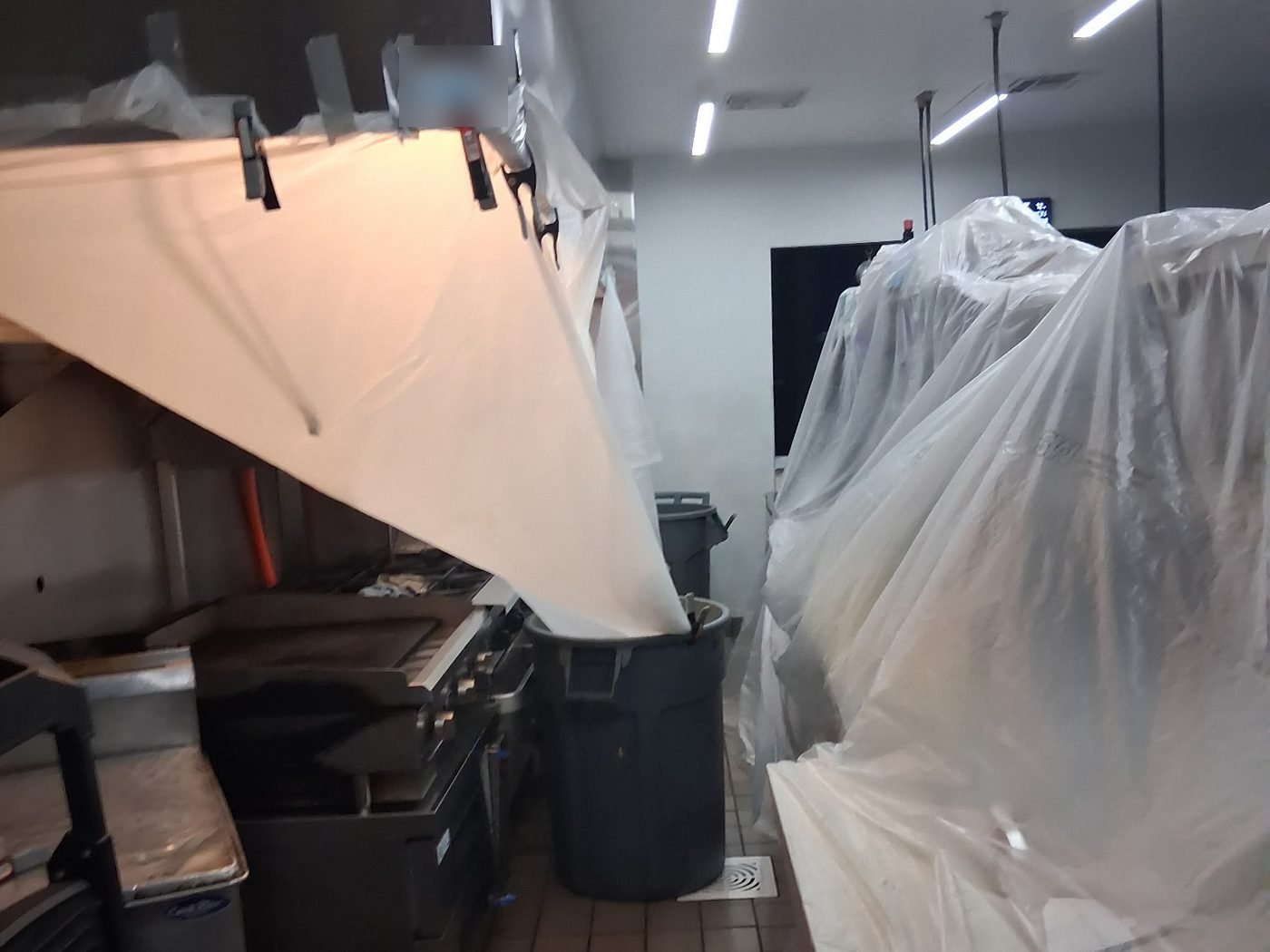
Before any grease comes loose, the crew covers the cooking equipment and nearby surfaces with plastic sheeting and builds a funnel under the hood that channels runoff into a collection container. This is what keeps grease water off your equipment, walls, and floor. It is also the first sign of a careful crew: good containment takes time, and skipping it shows up as a mess the next morning.
2. Filters come out
The baffle filters are removed and cleaned separately, then inspected before they go back in. A filter that is bent, warped, or no longer seats properly should be replaced rather than reinstalled, because gaps let grease bypass the filters and travel into the duct. Our guide to commercial hood filter cleaning covers how to wash filters between visits and when to replace them.
3. Heavy deposits are scraped
Thick, hardened grease is scraped by hand from the hood interior, the plenum (the space behind the filters), and the accessible duct. Scraping first means the chemical and water steps can reach bare metal instead of sliding over a crust.
4. Degreaser is applied
A commercial degreaser is applied to the hood, plenum, and duct surfaces and given time to break down the remaining grease.
5. Everything is pressure washed
The loosened grease is rinsed away with a high-pressure wash, working from the duct back toward the hood so the runoff drains into containment. This is the step people mean when they search for hood pressure washing. It is one part of a hood cleaning, not the whole job, and it is different from the exterior pressure washing a restaurant may book for its patio or dumpster pad. We explain that difference in kitchen hood cleaning vs pressure washing.
6. The rooftop exhaust fan is opened and cleaned
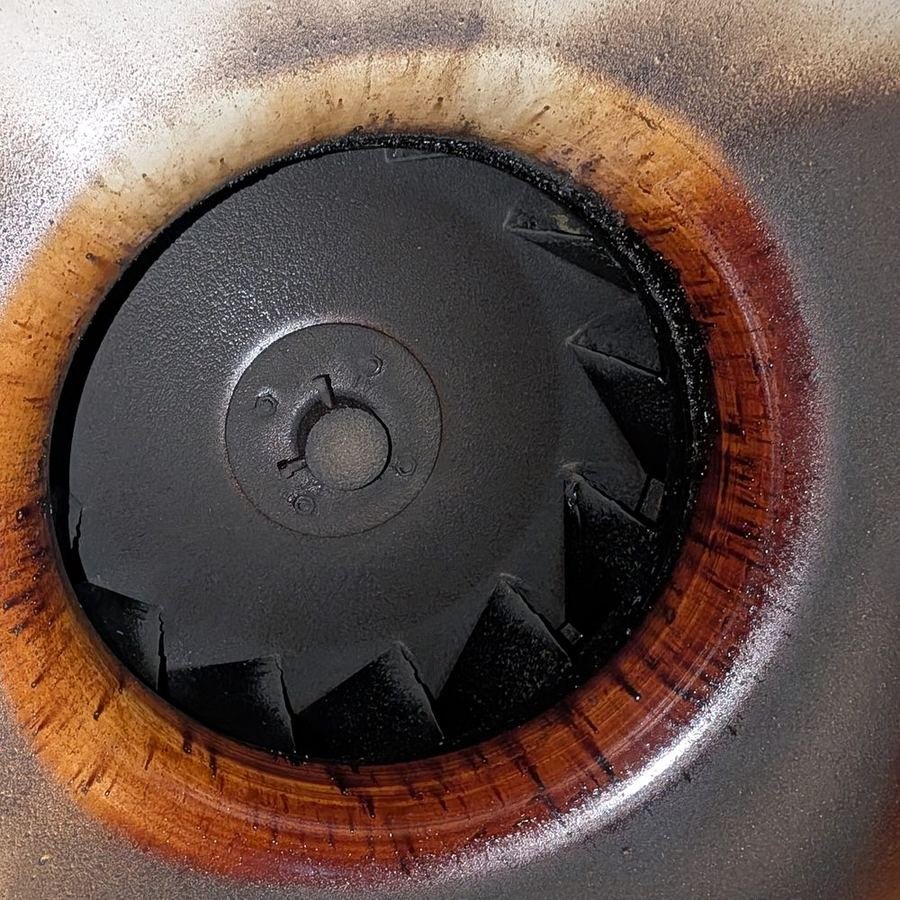
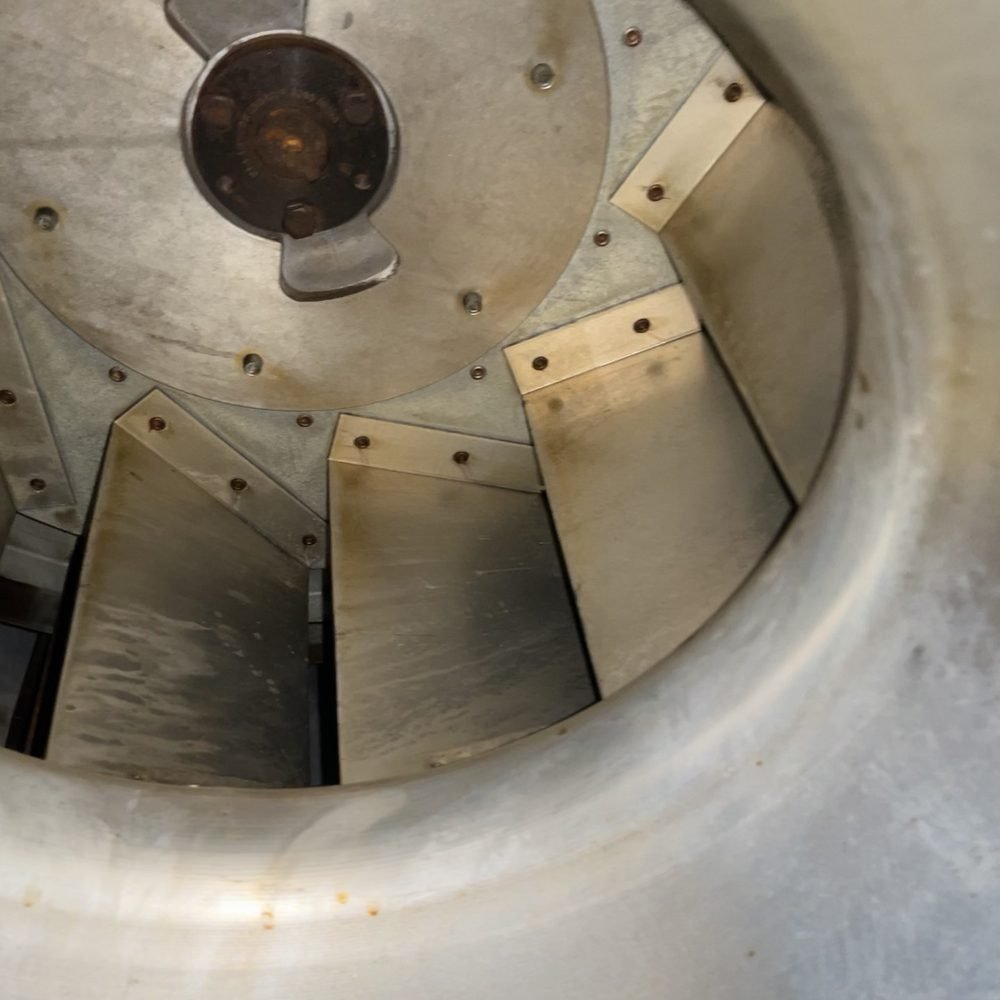
The exhaust fan on the roof pulls the grease-laden air out of the building, and grease collects on its wheel (the blades) and inside its housing. The fan is opened so the wheel and housing can be scraped, degreased, and rinsed. A kitchen can have spotless hoods and a fan that has not been touched in a year. If your provider never goes on the roof, the job is not finished.
7. The kitchen is put back together
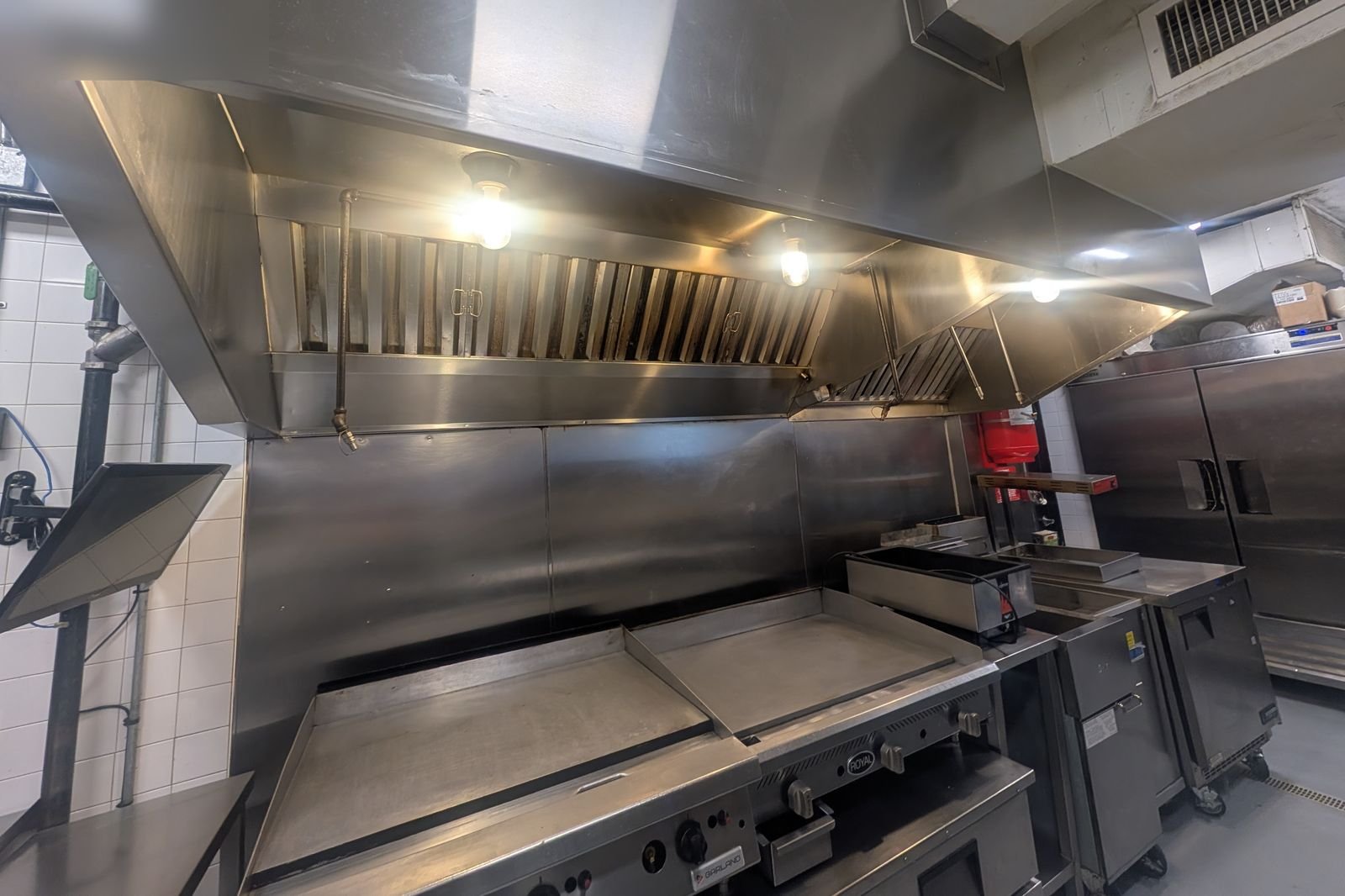
Clean filters go back in, seated correctly with no gaps. The hood exterior is wiped down, the plastic comes down, and the work area is cleaned up so your opening crew walks into a working kitchen.
8. The work is documented
The last step is proof. Under the 2021 International Fire Code, which Houston enforces, an inspection of the hood or duct system ends with a tag in a conspicuous location showing the service provider’s name, address, phone number, and the date of service, and each cleaning is recorded with who did it, for which company, and when. Photos record what the system looked like before and after. A good report also tells you what could not be cleaned, which matters more than most operators realize. More on that below.
What you should have when the crew leaves
A cleaning you cannot prove is hard to defend to an inspector or an insurer. After every service, you should be able to point to three things. (For the inspection itself, see our Houston fire marshal kitchen inspection guide.)
| What | Why it matters |
|---|---|
| A service tag on the hood | It shows at a glance which company last serviced the system and when. The fire code Houston enforces calls for one whenever the hood or duct system is inspected. |
| Before-and-after photos | Photos show the condition of the hood, duct, and fan, including the parts you never see. |
| A written record you keep on file | The fire code calls for records of each inspection and cleaning showing who did the work, the company, and the date. Keep every one, not just the latest. |
At Albedo’s Return, every job includes before-and-after photos, and Compliance Subscription clients receive a structured inspection report by email after each service. If your current provider leaves a sticker and nothing else, ask for the photos.
The question most people skip: what was not cleaned?
Not every inch of every duct can always be reached. Some older buildings have long duct runs with no access panels, or sections hidden behind walls and ceilings. When part of the system could not be cleaned, the written report should say so. That note is not a technicality. It is the difference between a kitchen that is clean and a kitchen that only looks clean from the cook line.
If your report never mentions anything that could not be reached, ask how the duct was accessed. If a section needs better access, we document it in the photos and talk with you about the options. The five signs your restaurant may be at risk during a fire inspection include ductwork and rooftop components that get skipped, for exactly this reason.
The next morning: a two-minute check
- The exhaust fan starts and pulls air normally when you turn on the hood.
- Every filter is in place and sits flush, with no gaps.
- Pilot lights and equipment are back on and working.
- The new service tag is on the hood with the correct date.
- You have received, or know when you will receive, the photos and any report.
If something looks off, call the provider that day. A good crew would rather fix it immediately than hear about it at your next inspection.
Who does the work at Albedo’s Return
Albedo’s Return is a woman-owned company, and the work stays in-house. Every cleaning is done by Ann Tran, our owner, or by a team member working under Ann’s direct review. Ann is on most jobs herself. When she is not on site, she reviews the documentation and the quality of the work before the job is closed out. We clean the full system from hood to rooftop fan, across Houston, from Downtown, Midtown, and the Heights to River Oaks and the Galleria. See what our kitchen hood cleaning service covers.
Frequently asked questions
Do I have to close my restaurant for a hood cleaning?
Not during service hours. Cleanings are scheduled after close, overnight, or on a day you are not cooking, so the kitchen is back in service for your next shift.
How long does a commercial hood cleaning take?
Most jobs take 2 to 6 hours. The number of hoods, the length of the duct run, and the amount of buildup set the time. We confirm an estimate after the assessment.
Is hood cleaning the same as pressure washing my hood?
No. Pressure washing is one step inside a hood cleaning. A complete cleaning also includes containment, scraping, degreasing, the filters, the duct, the rooftop fan, and documentation.
Does a hood cleaning include my fire suppression system?
No. In Houston, the hood fire suppression system (the nozzles, piping, and tank that protect your cooking equipment) must be inspected and service tagged at least every six months, and after any activation, by an approved fire protection equipment company. That is a separate service with its own schedule.
See what your system needs, at no cost
We will look at your hoods, filters, duct access, and rooftop fan, then give you a clear scope and a realistic time estimate. The assessment is free.